How to Write Better ChatGPT Prompts for Accurate AI Responses
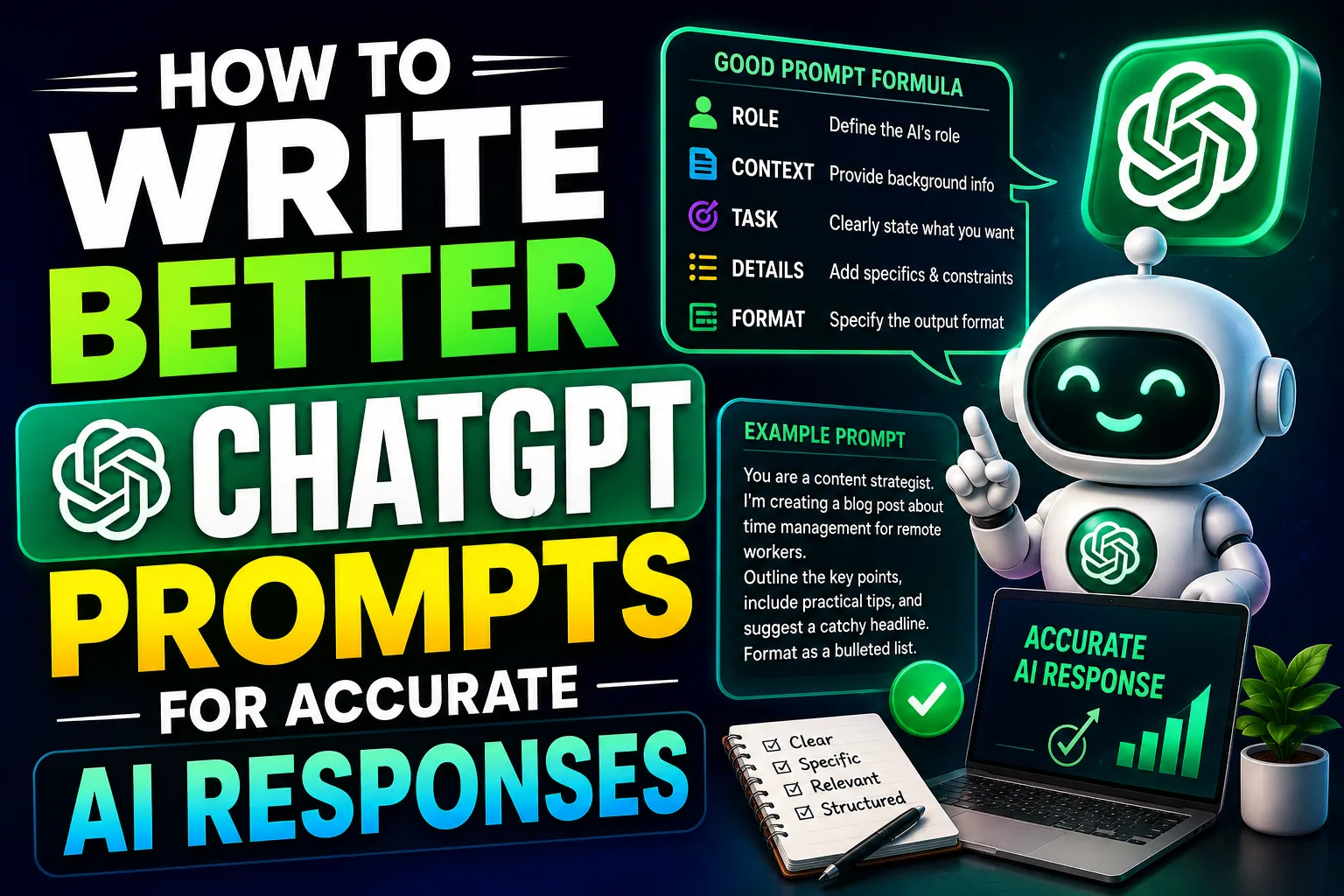
Getting accurate and high-quality responses from AI is not about luck; it is about providing the right instructions. Treating ChatGPT or any AI generator like a sophisticated collaborator rather than a basic search engine is the key to unlocking its full potential. Here is how to structure your prompts for professional-grade results.
1. Assign a Clear Role and Persona
Before giving the AI a task, tell it who it should be. This establishes the right tone, vocabulary, and level of expertise.
- Weak: "Write a prompt for an image."
- Strong: "Act as an expert prompt engineer specializing in high-fashion digital imagery for social media. Your task is to..."
2. Be Hyper-Specific with Your Subject Matter
Vagueness leads to average, generic outputs. Detail exactly what you want, leaving no room for assumptions. If you are generating visual content, list the specific elements and structural details.
- Weak: "Create an image of a simple dress."
- Strong: "Generate a prompt featuring a heavy designer saree with intricate 3D floral embroidery, 3D molten glass ribbons, and metallic rose accents. Only feature a saree; do not include any other type of dress."
3. Define the Aesthetic, Framing, and Medium
For highly stylized content, you must explicitly state the composition rules. Dictate the environment, lighting, and camera angles.
- Lighting & Background: Specify exact styles, such as using a "Light Crystal Flow" or "Neon Dream Mist" aesthetic for the background.
- Composition: Detail the framing, such as "cinematic framing optimized for a viral Instagram Reel."
- Action/Pose: Dictate the subject's stance, like an influencer-style "Dupatta Front Toss Soft Motion Pose."
4. Utilize Negative Prompting
Telling the AI what to exclude is often as important as telling it what to include. Set strict boundaries to prevent the AI from defaulting to unwanted elements.
Example: "Exclude any simple saree designs, plain fabrics, or minimalistic aesthetics. Strictly no simple outfits; focus only on heavy advanced designer elements."
Conclusion
By structuring your prompts with clear roles, hyper-specific details, defined aesthetics, and strong negative constraints, you transform the AI from a basic tool into a precision instrument for your content creation. The better the context you design, the more accurate and powerful the AI response will be.